Bill is at a wine bar on Saturday night, enjoying a glass of Pinot Noir.
After striking up a playful conversation with Lisa (who prefers Syrah), he asks for her telephone number. Lisa agrees to Bill’s request, and he creates a new “contact” in his cell phone.
“No,” Lisa stops Bill. “You’ll have to memorize it. I don’t want you to write it down.”
Bill accepts the challenge and confidently repeats the 10-digit number a few times aloud. Lisa proceeds to talk about her cat Nibbles for an hour and then leaves the bar after she realizes how late in the evening it has become.
By the next day, Bill has forgotten Lisa’s phone number. He remembers how much Nibbles loves playing with yarn because he used to have a cat that loved yarn … and although he wants to send Lisa a text message, her digits weren’t meaningful to him.
The same thing happens when you memorize the definitions of two similar words instead of learning how to use them.
When you memorize without any meaningful context, you may quickly forget a definition and continually select a word that doesn’t mean what you think it means.
When you learn how to use the following 12 pairs of words, it will be easier to choose the proper one for your content.
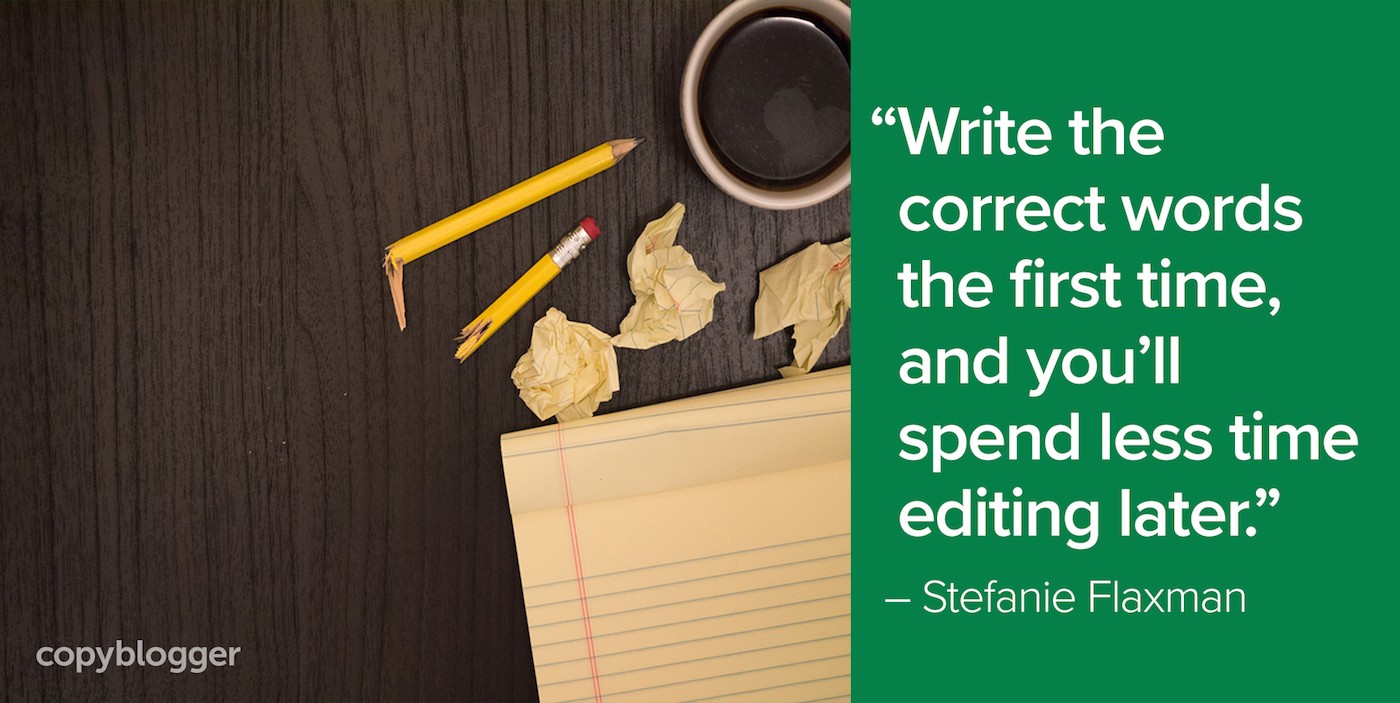
Write the correct words the first time, and you’ll spend less time editing later.
1. Compliment vs. Complement
Compliment
A “compliment (noun)” is an “expression of praise.” When you “compliment (verb)” someone, you praise something about her.
“I like your neon-rainbow, unicorn t-shirt” is a compliment.
The word “compliment,” spelled with the letter “i,” should remind you of saying “I like” — how you begin a compliment.
Complement
A “complement (noun)” is “something that completes something else.” When something “complements (verb)” something else, it “makes it whole/adds value to it/completes it.”
Complete is part of the word “complement.”
2. Premiere vs. Premier
Premiere
“Premiere (noun)” is “the first showing of an event.” “Premiere” as other parts of speech conveys a similar meaning.
Premiere could describe a movie premiere. The words “premiere” and “movie” both end with the letter “e.”
Premier
Use the adjective “premier” to describe “the best ___.”
Premier means premium. Neither word ends with the letter “e.”
“Premier (noun)” is less common. The term describes a person who is first in rank.
For example, a “premier” may be a chief executive officer or president of a company.
3. Effect vs. Affect
Effect
The noun “effect” refers to an “outcome or result.”
If you associate “special effects” in movies with “effects,” you’ll remember that “effect” should be used as the noun to describe an outcome.
Affect
The verb “affect” describes something that “manipulates or causes a change.”
An emotional piece of news may affect how you feel after you hear it.
4. Accept vs. Except
Accept
The verb “accept” means “to take in or receive.”
When using the word “accept,” associate it with the word “acceptance” — you take something in; you receive it.
Except
The word “except” is not a verb. It can be used as a preposition, a conjunction, or an idiom. In each form, the word “except” means “with the exclusion of ___.”
When you use the word “except,” you want to exclude something.
5. Ensure vs. Insure
Ensure
Use the verb “ensure” to convey “make certain or guarantee.”
To remember when to use “ensure,” note that the last two letters of the word “guarantee” are “e” and the word “ensure” begins with the letter “e.”
Insure
The verb “insure” communicates “protecting assets against loss or harm.”
If you are discussing the protection of assets, think of car insurance and then use the word “insure.”
6. Regard vs. Regards
Regard
Use “regard” when you want to express consideration or reference something specific.
Writing “in regards to” is one of my content pet peeves.
“Regard” is typically the proper word choice, unless you are sending your feelings of empathy to someone else. Which brings us to …
Regards
“Regards” are your “best wishes or warm greetings.”
7. Beside vs. Besides
Beside
If you want to convey the meaning of “next to or alongside,” use “beside.”
Associate the word “beside” with the word “alongside.” Both words end with the letters “s-i-d-e.”
Beside can also mean “not connected to.” You would write “that is beside the point.”
Besides
The word “besides” means “in addition to.”
“Besides” ends with the letter “s,” which reminds us of a plural word — two or more of something, additional items.
“Besides can also mean “other than/except.”
Associate the “s” sound in the word “except” with the word “besides,” which ends with the letter “s.”
8. Stationery vs. Stationary
Stationery
“Stationery” is always a noun. It’s typically decorative paper and ornate pens. You might use it to jot down quotes from your favorite writing books.
Associate the noun “stationery” with “paper.” The last three letters of the noun “stationery” contain the letters “er.” The word “paper” also ends with the letters “er.”
Stationary
“Stationary” means “still, grounded, or motionless.” It can be used as a noun or adjective.
Since the word “stationary” can also be used as an adjective, associate the “a” in the word “adjective” with the letter “a” in the last three letters in the adjective “stationary.”
9. Precede vs. Proceed
Precede
“Precede” means “to go before.” It is a verb.
Star Wars: Episode I — The Phantom Menace (1999) was a “prequel” to the original Star Wars film (1977).
The events that took place during the prequel came before (or preceded) Star Wars.
Proceed
“Proceed” is also a verb, but it means “carry on, continue, move forward.”
Think of “proceed” as “proactive, taking the next step in a sequence.”
“Precede” is “before” and “proceed” is “after.”
10. Who’s vs. Whose
Who’s
“Who’s” is a contraction of two words — most commonly, “who is” (present tense), “who has,” or “who was” (past tense).
If you are combining a verb with the word “who,” it’s appropriate to use “who’s” (with an apostrophe).
Whose
“Whose” is a possessive pronoun, similar to “mine,” “yours,” “his,” or “hers.”
If you don’t intend to combine two words with an apostrophe, use the possessive pronoun “whose.”
11. Sometime vs. Some time
Sometime
When “sometime” is one word, it’s an adverb that refers to “one point in time.” For example, “I’d love to have coffee with you sometime.”
Some time
When “some” and “time” are separated as two words, think of the word “some” as an “amount.”
“Some time” is “an amount of time.” For example, “I just ate so much ice cream. It will take some time before I’m hungry again.”
12. Into vs. In to
Into
“Into” is a preposition that means “entering or transforming.” For example, “The fashion designer transformed the ugly fabric into a chic dress.”
A noun typically follows the word “into.”
In to
A verb that pairs with the word “in” typically goes before “in to.”
For example, “During the baseball game, the outfielder moved in to catch the ball.”
Your turn …
Do you have any word choice pet peeves? What are your favorite tips for learning how to use certain words correctly?
How could Lisa have helped Bill learn her phone number, rather than memorize it? 😉
Share your thoughts in the comments below.


![[08] 10 Goals that Make Content Marketing Meaningful](../../rainmaker.fm/wp-content/uploads/2017/07/sites-008.jpg)
The “your” vs. “you’re” is always high on the list. One irksome misuse that I am seeing more and more in correspondence is “You’re welcome,” getting written incorrectly as “Your welcome.”
“Thank you again for dinner!”
“You’re welcome!”
“Well, I see you bothered to show up.”
“Your welcome sure doesn’t convey much hospitality.”
Never understood how it was possible to confuse “you’re” and “your” It’s so clear and evident, no? And what’s even more awkward, I notice that it’s native speakers who confuse these two words, not ESL ones.
#1 is a biggie for me Stefanie. I shall think “i” to be nice and “e” to add. Makes little sense but I will remember the concept and use each word properly. My compliments to you and this post
I think i used to mistake “into” and “in to” a while back.
Everyday vs every day. I see it wrong everywhere!
I’ve always struggled with when to use “in to” versus “into.” Thanks for the quick tip!
I still see its & it’s used incorrectly along with your and you’re.
While not a word, I often google before using e.g. and i.e. to make sure I have the correct one.
I like to think of i.e. as “for instance,” where you just give brief instances to clarify or expand on your point.
For e.g., I think of “for example,” where you would elaborate a bit more, with a district example.
“I” for “instance” and “e” for “example.”
Amounts versus quantities.
While more cows can give more milk, the contrary condition needs two different words:
FEWER cows give LESS milk.
If you can count it, there are many. If some are missing, there are fewer.
If you can’t, you probably have to measure it. Think of liquids or grains: a cup of milk is less than a quart.
Their and there.
Two, too and to
And the infamous non-word regardless are my pet peeves.
I’m okay with “regardless,” but I get a little more picky when it comes to “irregardless.” 😉
Looks to be another good viral grammar post from Copyblogger! Thanks Stefanie for sharing these helpful tips.
Related to #1 is the common error of complementary vs complimentary.
I noticed the error in my own subscriber welcome message! Complementary is something that completes. Complimentary has two meanings (which causes even more confusion and error) … One of which is something free. The other meaning is giving praise.
I hope this is a complementary comment to your complimentary blog post!
Saying Whenever for When…example “Whenever I was at church with you last Sunday…” referring to a specific event or time but using a non-specific term!
My biggest pet peeve is saying “I could care less” instead of “couldn’t care less”.
…Unless, of course, you actually “could” care less…
Thank you so much for this very helpful post.
You have put very useful words comparison.
Thanks again.
I’m adding one of my favorites.
To vs. Too vs. Two
“To” is a preposition, which is generally followed by a noun or noun phrase. an example could: To be successful, you have to work hard.
“Too” is an adverb that means “also.” an example could be: after I ate an banana, I ate a apple too.
“Two” is a number. an example could be i have two apples.
//Ravn
Ravn,
Those are great ones, but both “to” and “too” serve dual purposes.
The examples you chose for “to” are indicating its use combined with a verb to make the infinitive verb form, such as “to be” and “to work” as you demonstrated. Examples of “to” combined with a noun (and often an article) are needed here as well: to the store, to a movie, to bed.
“Too,” in addition to meaning “also” may indicate an extreme degree: It’s too hot in this room, and the test is too hard to take on too little sleep.
Oh My GOD! Ma’am, You have cleared A lot of misunderstandings. Thanks for this Interesting article.
I’m curious how you would differentiate “anyway” and “anyways”……
I always use “anyway” without using the “s”. But am often confused as I find many educated people say “anyways” when used in context of subject changing.
I’d use “anyway” when writing. “Anyways” has the same meaning when used as a transitional word, but it’s more informal.
I’m not perfect, but it always surprises me. I have a few folks that are constantly using the word “hear” for “here”. I always tell them that “hear” should be used if it has to do with the “ear” (Can you hear me now?), and “here” is the opposite of “there” (I am here and you are there… or… If I am here, then I am not there.).
…And they still mess it up.
Nice lil English lesson. Always a good refresher.
Hi Stefanie,
Yes, learning how to use the words is more important than memorizing it’s meaning. Words are “the most powerful drug used by mankind.”
As a writer, it is important not only to think about what you say, but how you say it. To communicate effectively, it is not enough to have well organized ideas expressed in complete and coherent sentences and paragraphs. One must also think about the style, tone and clarity of his/her writing, and adapt these elements to the reading audience.
Lisa could have helped bill learn her phone no. by converting each individual number into a letter, since words are easy to memorize than numbers.
I will tweet your post.
Thanks a lot for sharing.
I like the suggestion of converting the numbers into letters, Manish! That would have been a fun little game itself and perhaps an easier way to remember the numbers.
Seriously, I found many of the native English bloggers doing the same wrong things time and time again. It sometimes proves to be too ugly for the posts that are really worth reading.
“to” and “too” is the one that gets me. For the most part I understand it but it certain circumstances I just have to guess.
If you can find a way to remember “too” means “also” (and “to” never means “also”) that one should get a lot easier.
“Also” means “in addition,” so it might help if you associate “in addition” with the two “o” letters in “too.”
Toward vs. towards!
The misuse of premise and premises is my number one word peeve.
Great article, and helpful. It would appear that as were evolving, our speech is getting lazier. Im sure all of todays rules we have for syntax will be obsolete in 100 years. We’ll probably all just text each other.
One that I’ve seen increasingly often (mainly on social media and in comments) is “could of” or “should of”.
As in “She should of known that she had made a mistake.”
The sentence doesn’t even make sense – it’s clearly supposed to be “could have”/”should have”. The mistake obviously comes about because the pronunciation of “could’ve”/”should’ve” is similar to “could of”/”should of”. It makes me wonder how little attention some people are paying to grammar these days…
It’s interesting how things we hear when we speak can turn into mistakes when we write.
Another similar example is “beckon call” instead of “beck and call.”
Thanks for the reminder! The old ‘affect’ vs ‘effect’ conundrum is one I always Google before committing to!
Great Post Stephanie! I was an English trainer for 4 years and the most common word choice error I have seen (that’s not already in this list) is between practice/ practise or advice/ advise.
When you use it as a noun, its practice or advice; and when used as a verb, its practise or advise.
Remember Cartoon Network (CN) – Ce for Noun; and Se for Verb
Nice tip for British English!
Do you MAKE a decision or do you TAKE a decision?
I hate to make generalizations, but I’ve noticed that ESL speakers often use “TAKE” in this usage, and I suspect that it’s something to do with the translation of TAKE from other languages or roots. Anyone have input into the proper usage of MAKE vs TAKE here?
That’s an interesting point, Mike.
Since “make” and “take” certainly have different meanings in English, it also could just be an easy mistake for non-native speakers to make because they sound similar.
For example, if I were learning French, I might mistakenly say “une amande” (an almond) when I meant to say “une amende” (a fine). They sound similar, so I might use them to mean the same thing even though they are two different words with two different meanings.
So even though “make a decision” is correct, “take a decision” could seem like the same thing to someone who is getting familiar with those words.
I often read these lists and it’s usually the same suspects on the rundown, but I admit: I had no idea about regard and regards! I have misused that in the past, for sure. And I’ve had to Google compliment vs. complement, but I like the little mnemonic tricks to keep them straight!
I’m happy to hear this list offered something new, Shannon. Thanks for reading!
Discreet/discrete; bath/bathe; loath/loathe; blonde/blond; brunette/brunet; breath/breathe …..